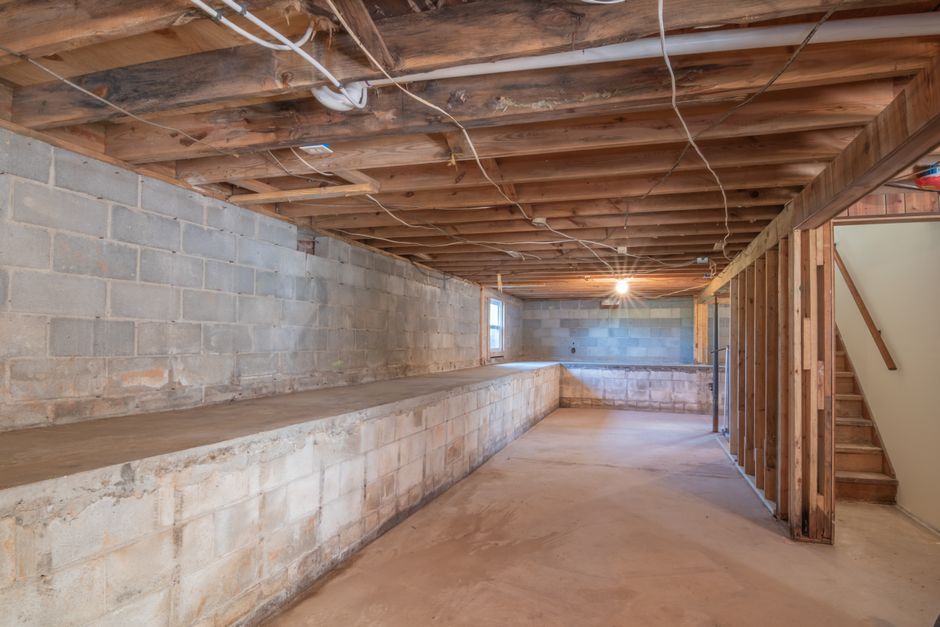
Basement Dehumidifier Installation in Passaic, NJ
Basement dehumidifier installation in Passaic, NJ removes excess moisture from basements and crawl spaces that have a humidity problem rather than direct water intrusion. High humidity causes mold growth on wood framing, a persistent musty odor, rust on metal surfaces, and damage to stored items — even when no water is visibly entering through the foundation. A correctly sized, properly installed dehumidifier controls these conditions without requiring waterproofing work, provided that humidity — not water intrusion — is actually the source of the problem.
What the Installation Involves
A basement dehumidifier pulls humid air across a cold refrigerant coil. Moisture condenses on the coil, collects in a drain pan, and exits through a permanent drain line — no bucket to empty, no monitoring required. The unit cycles on and off to maintain a target relative humidity level, typically 50–55% for a basement in New Jersey. Unlike portable consumer units, installed basement dehumidifiers connect to a hard-wired drain and operate effectively at lower temperatures — a basement can be 55–60°F even in summer, and consumer units stop working reliably below 65°F. For crawl spaces, a dehumidifier is typically installed as part of or after a full vapor barrier encapsulation to manage residual moisture that passes through the liner.
If moisture readings remain high after dehumidifier installation, your basement may have active water intrusion through the foundation that a dehumidifier alone cannot address. Cracked walls require separate foundation crack repair.
Signs You Need a Basement Dehumidifier
These signs point to a humidity problem rather than water intrusion through the foundation. The distinction matters because the fix is different. According to the EPA, indoor relative humidity above 60% creates conditions for mold growth.
- A musty smell in the basement that persists regardless of rainfall or season
- Mold on wood framing, cardboard boxes, drywall, or stored items
- Rust forming on metal shelving, pipes, appliances, or tools
- Condensation on cold pipes, windows, or walls during summer months
- Relative humidity readings consistently above 60% inside the basement
- Warping or swelling of wood doors or trim near the basement
When a Dehumidifier Will Not Fix the Problem
If water is entering your basement through the walls or floor during rain, a dehumidifier will not solve the problem. You cannot dehumidify fast enough to compensate for active water intrusion. Waterproofing must come first. A dehumidifier manages residual humidity after water entry has been stopped. We will tell you at the inspection whether you have a humidity problem, a water intrusion problem, or both.
What Affects the Cost
The unit capacity needed depends on the square footage of the space and its moisture load. A 500 sq ft basement with mild humidity needs a different unit than a 1,200 sq ft basement with a persistent condensation problem. Crawl spaces may require a different unit type than a conditioned basement. Drain line routing and any electrical work affect installation cost. If the crawl space is not yet encapsulated, encapsulation typically precedes dehumidifier installation.
Business Hours
- Mon–Fri
- 7:00 am – 6:00 pm
- Saturday
- 8:00 am – 2:00 pm
- Sunday
- Emergency calls only
Frequently Asked Questions
- What humidity level should my basement be at?
- Below 60% relative humidity to prevent mold growth. A target of 50–55% is reasonable for a Passaic home through the humid summer months. Above 60%, mold can establish on organic materials within 24–48 hours of a single moisture event.
- Can I just use a store-bought unit?
- You can, but consumer units have smaller collection tanks, shorter duty cycles, and do not operate reliably below 65°F — common in basements even in summer. They also require manual emptying. Installed units handle the conditions more reliably with no ongoing maintenance.
- How much does it cost to run?
- A properly sized unit uses roughly the same electricity as a window air conditioner. A unit that is too small runs continuously without ever reaching the target humidity, which uses more electricity and shortens the unit life.
- How often does an installed unit need maintenance?
- Most installed basement dehumidifiers require annual coil cleaning and filter replacement. If a drain line is properly sloped and unobstructed, the unit requires minimal ongoing attention — significantly less than portable units that need frequent bucket emptying.
Get a Free Inspection
We will look at your basement, tell you what is causing the problem, and explain what it takes to fix it. No charge, no obligation.
(973) 319-7059Serving Passaic, Clifton, Paterson, Wayne, Pompton Lakes, and all of Passaic County