Basement Waterproofing in Passaic, NJ
Basement waterproofing in Passaic, NJ addresses water entering through foundation walls, floor cracks, or the floor-wall joint. Homes across Passaic County deal with wet basements because the soil here holds water. When it rains or snow melts, saturated clay soil presses against foundation walls and pushes through any gap it finds — cracks, mortar joints, or porous concrete block. The correct waterproofing system stops that water intrusion at its source. Which system applies depends on where water is entering, the type of foundation, and how severe the entry is.
What Basement Waterproofing Involves
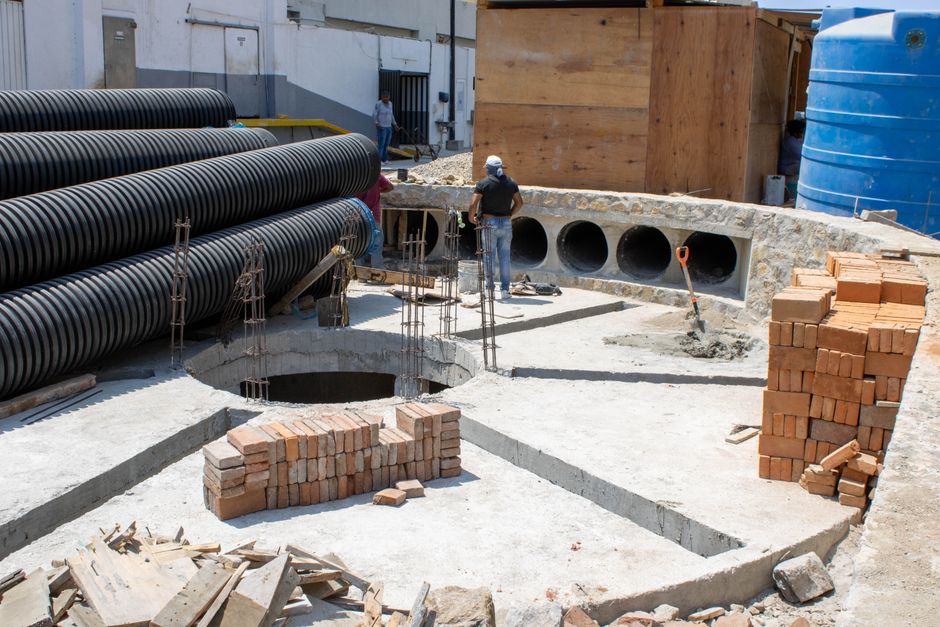
Waterproofing is not paint or caulk applied to the wall surface. The work involves managing water at its point of entry. Interior drain tile systems are cut into the concrete floor along the perimeter, collect water as it enters through the wall base, and route it to a sump pump that discharges it away from the foundation. Exterior waterproofing requires excavating down to the footer, applying a waterproof membrane to the outside of the wall, and installing drainage board and gravel before backfilling. Most Passaic homes need an interior system. Exterior work is warranted when the wall is actively failing — with horizontal cracks or lateral movement — or when the site conditions make exterior repair the correct long-term fix.
Interior drain tile systems route collected water to a sump pump for discharge away from the foundation. If your foundation wall has visible cracks, foundation crack repair should be addressed alongside or before the drainage system is installed.
Signs You Need Basement Waterproofing
If you see one of these, water is entering your foundation. More than one sign means the entry has likely been happening for some time. The EPA guidance on mold and moisture details why unchecked basement water entry is a health issue, not only a structural one.
- Water on the floor or at the base of walls after heavy rain or snowmelt
- White chalky staining (efflorescence) on block or concrete walls
- A musty smell that worsens specifically after rain
- Horizontal cracks in a block wall — a structural concern requiring immediate attention
- A previous waterproofing attempt that is beginning to fail
- Rust stains beneath basement windows or around the floor drain
When Waterproofing Is Not the Answer
If the moisture in your basement is summer condensation — appearing on cold pipes or walls during humid weather but not specifically after rain — waterproofing will not solve it. Condensation is an air humidity problem, not a water intrusion problem. A basement dehumidifier handles condensation. We will identify which situation you are in at no charge during the inspection, and we will tell you directly if the issue does not require waterproofing.
What Affects the Cost
Interior drain tile systems are priced by linear footage of perimeter. A one-wall fix costs less than a full perimeter installation. Finished basements require partial demolition to access the footer, which adds labor time. Whether an existing sump pit can be used or a new one must be cut affects the price. Exterior waterproofing involves excavation that varies with foundation depth, soil conditions, and whether equipment can access the site — tight side yards and deep footers increase cost significantly. In most Passaic County municipalities, interior waterproofing does not require a permit; exterior excavation may.
For permit and contractor licensing requirements in New Jersey, see the NJ Division of Codes and Standards.
Business Hours
- Mon–Fri
- 7:00 am – 6:00 pm
- Saturday
- 8:00 am – 2:00 pm
- Sunday
- Emergency calls only
Frequently Asked Questions
- Is interior waterproofing a permanent fix?
- Interior drain tile manages water that enters rather than blocking all entry. For homes with ongoing hydrostatic pressure — which is most older homes in Passaic — this is the practical long-term solution. It remains effective even if the wall develops new cracks over time.
- How long does the work take?
- Interior drainage on an average basement takes one to two days. Exterior waterproofing takes two to four days depending on excavation depth and the length of wall involved.
- Do I need a permit?
- In most Passaic County municipalities, interior waterproofing does not require a permit. Exterior excavation work may. We check permit requirements as part of the estimate process.
- How do I know if I need interior or exterior waterproofing?
- Interior drainage is appropriate for most Passaic homes — it manages water that enters and handles ongoing hydrostatic pressure. Exterior waterproofing is recommended when the wall itself is failing, when horizontal cracks indicate structural movement, or when the foundation must be repaired from outside. We determine this at the inspection.
Get a Free Inspection
We will look at your basement, tell you what is causing the problem, and explain what it takes to fix it. No charge, no obligation.
(973) 319-7059Serving Passaic, Clifton, Paterson, Wayne, Pompton Lakes, and all of Passaic County